Generic risk management was not written for power
Off-the-shelf enterprise risk management treats an energy project like any other balance-sheet item. It is not. An energy asset’s value is moved by forces a generic GRC model never sees: the power market (price, volatility, basis, capture, curtailment), the grid (connection, maturity, capacity), the regulation (REMIT/MAR, NEM, CACM, EBGL, FCAGL, EED, RED III, EU ETS), and the physics of the asset itself. Miss those, and the risk register describes a company that does not exist.
MeginLeid’s risk management starts from the opposite end — the market — and reads every asset through it.
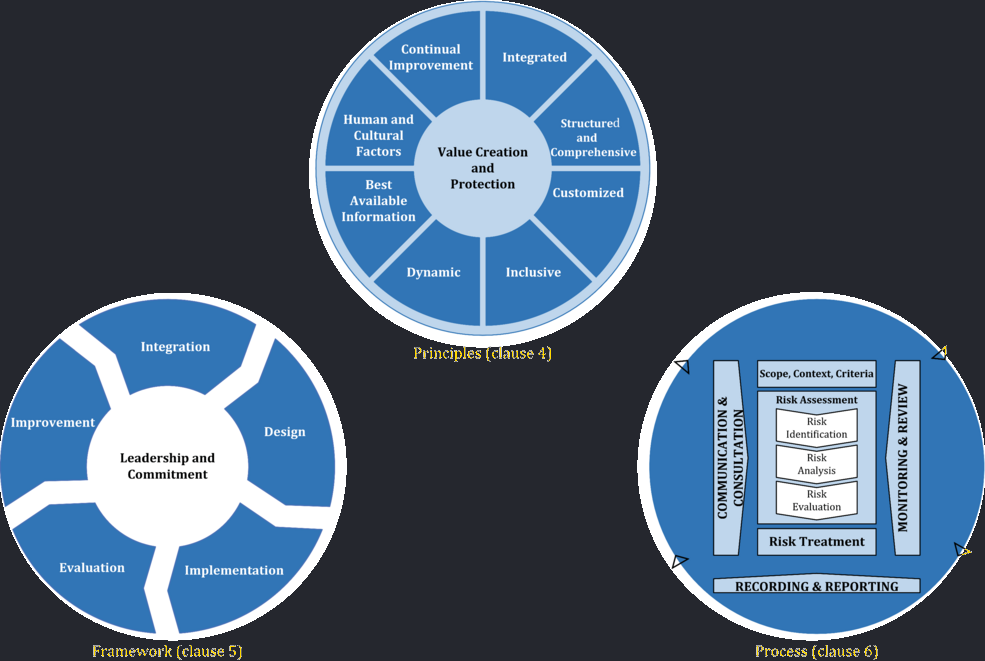
One recognised spine, one source of truth
- ISO 31000 as the structure. Internationally recognised, it nests Principles → Framework → Process. We use it not for a certificate — it is a guideline, not a badge — but because it keeps language and structure consistent across an entire portfolio.
- A Single Source of Truth per asset. Consistency and coherence are the value mechanism — one representation of the project that every document derives from, not a stack of reports that quietly disagree.
- Quantified where it counts. Profit-at-Risk and Value-at-Risk for market exposure; IFRS 9 / IFRS 13 for hedge, own-use and fair-value treatment; PyPSA for the physical grid and power model.
- Three Lines of Defense for governance that auditors and investors recognise on sight.
Technology-agnostic — including the combinations
The same framework applies whatever sits on the site:
Hydrogen · Data centres · Battery storage (BESS) · Wind · Solar PV · Hydropower
— and, increasingly, combinations on a single site: PV paired with storage, a flexible load co-located with generation, hydrogen alongside a data centre. The risk profile combines as the technologies combine; one framework holds the whole asset, not a folder per technology.
A power-trader’s lens
The work is led by a former power trader. That means risk is read the way the market reads it — decomposed, explicit, and resolved to clear choices — and priced against where value actually sits, not where a template expects it.
Engage
Risk advisory for energy assets — from a single project to a multi-site portfolio.
Heine Rønningen · MeginLeid AS · [email protected]